Bangkok Street Food by Tuk-Tuk: A Local's Guide to Eating Like You Live Here
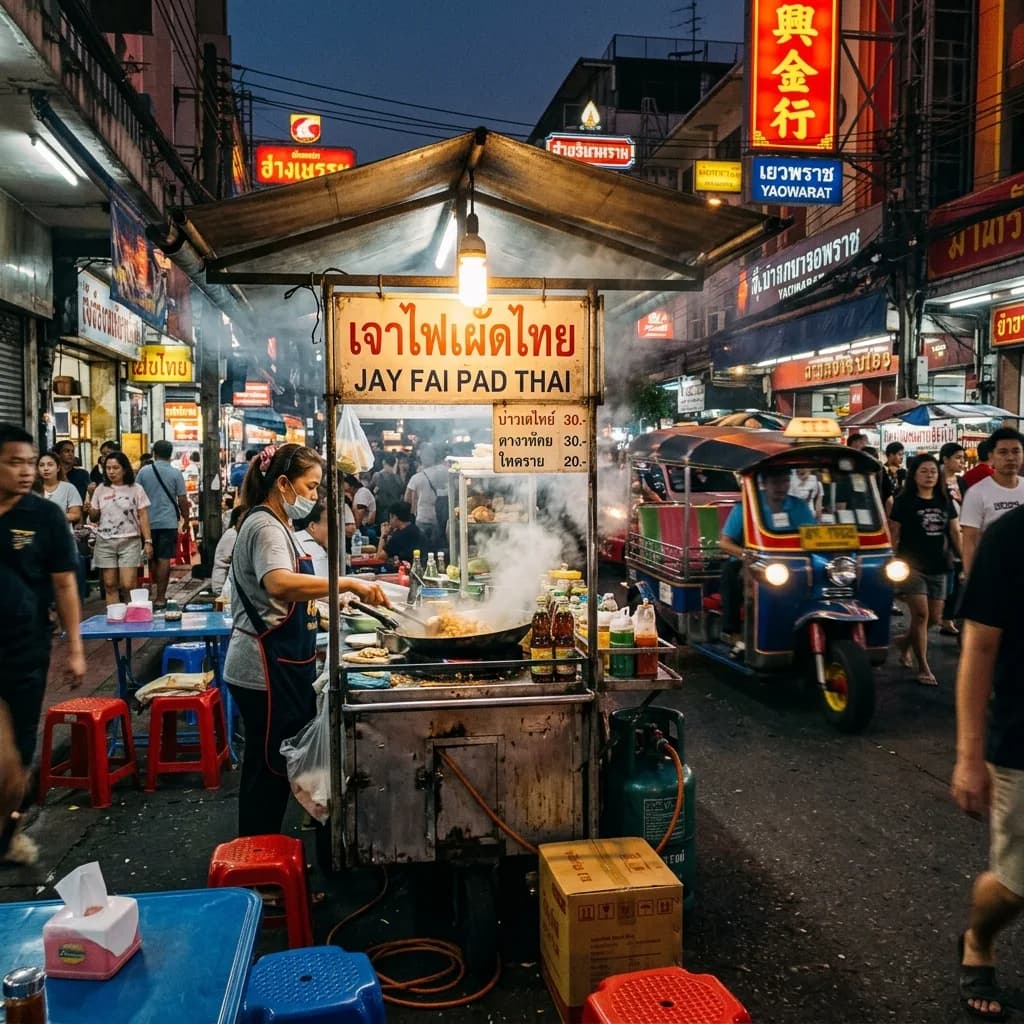
Bangkok has a secret agreement with hunger. The moment you arrive, it starts feeding you, and it doesn't stop. But if you stick to the tourist strip, you'll eat the same pad thai a thousand other visitors had before you, at three times the price, with none of the story.
The real Bangkok street food scene lives in the back alleys, the stalls that have been here for decades, the vendors who know one dish and do it better than anyone. This guide takes you there, and explains why a tuk-tuk is the only sensible way to see it all.
Why Bangkok Is One of the World's Great Street Food Cities
Lonely Planet consistently places Bangkok at the top of its list of the world's best food cities, and it's not for the hotel buffets. The city runs on street food. Walk past a hospital, a university, or a bus interchange and you'll find a cluster of vendors whose entire lives are devoted to a single dish: one vendor for boat noodles, one for mango sticky rice, one for grilled pork skewers.
This hyper-specialisation is what makes Bangkok street food extraordinary. These aren't jacks of all trades. They're artisans. And unlike restaurant kitchens behind closed doors, you can watch every dish being made right in front of you.
The Neighbourhoods That Matter Most
Not all Bangkok streets are created equal when it comes to food. Here are the areas with the highest concentration of serious eating.
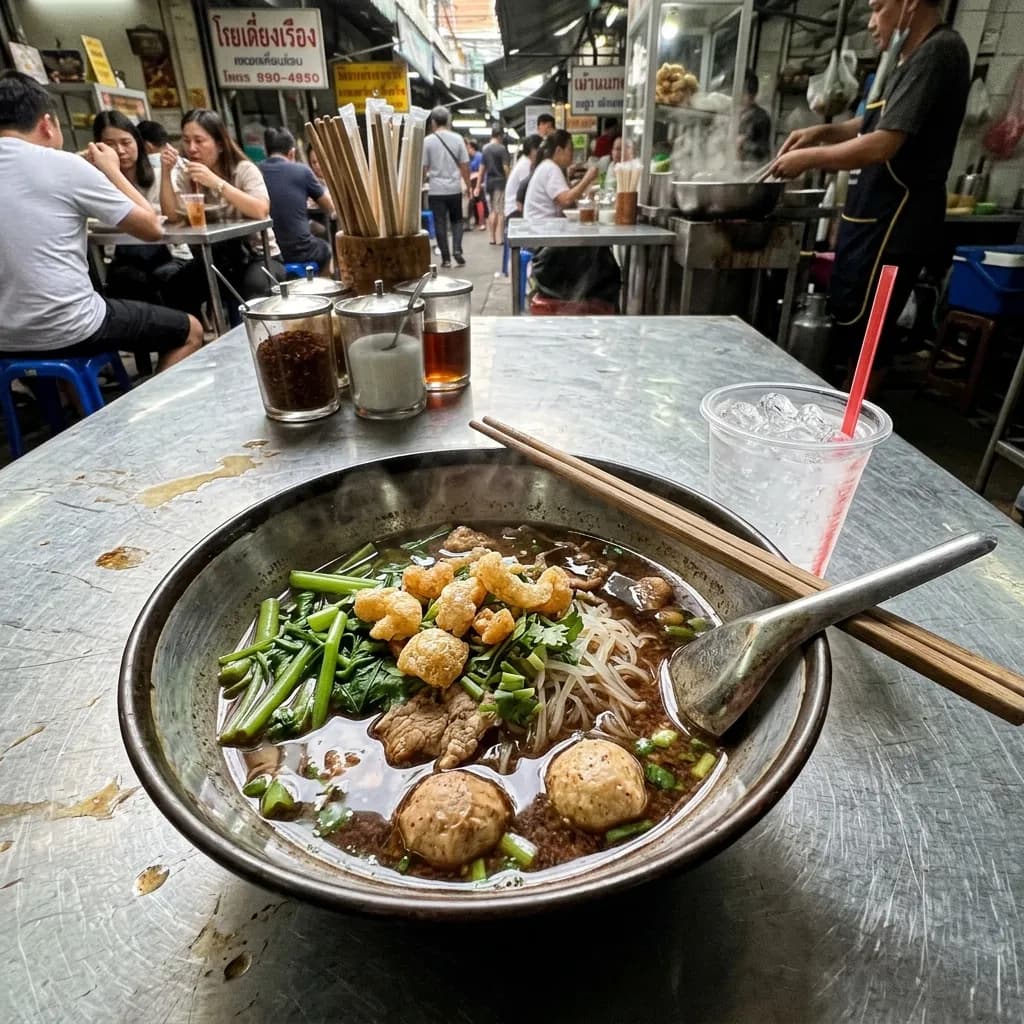 Boat noodles: small bowls of intense, spiced broth that cost almost nothing and reward ordering five.
What to Order: The Bangkok Street Food Hit List
You don't need to be adventurous to eat well in Bangkok, you just need to know what to ask for.
Why a Tuk-Tuk Tour Makes Sense
You could, in theory, do this on foot. But the stalls that matter are spread across the city, and Bangkok traffic is the stuff of nightmares if you're navigating it yourself for the first time.
A tuk-tuk tour solves this elegantly. You cover ground quickly, move between neighbourhoods that would take 45 minutes to reach by taxi at rush hour, and arrive at each vendor at exactly the right time of evening. The open sides of the tuk-tuk mean you can smell a great stall before you even see it.
More importantly, a local guide on a tuk-tuk tour knows which vendors are worth stopping for, and which ones have simply learned to look photogenic for the cameras. That distinction is everything.
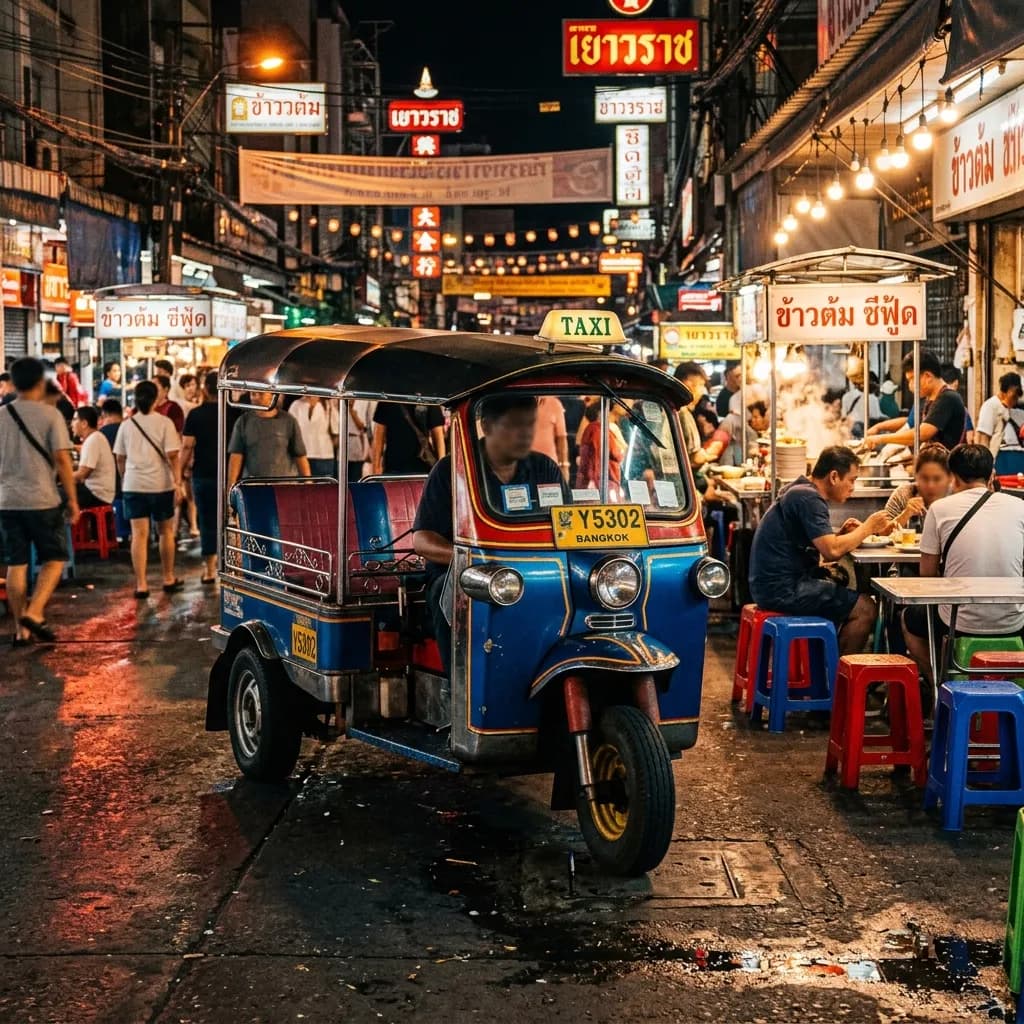 The tuk-tuk isn't just transport: it's the best way to move between Bangkok's spread-out food neighbourhoods.
The Unwritten Rules of Eating Street Food in Bangkok
When to Go
Evening is the right answer: from around 6pm, the city's street food scene reaches full intensity. The best vendors are set up, the light is golden, and the streets have that particular Bangkok electricity that you simply can't find anywhere else.
Avoid Mondays if possible; Bangkok has a citywide street cleaning day on Mondays and many vendors take the day off, reducing the street food scene significantly.
“The heart of Thailand doesn't beat in its luxury restaurants, but in the fiery woks of its street vendors.”
Ready to Eat?
The Bangkok Street Food by Tuk-tuk tour visits four to five stops across the city with Monika as your guide: the vendors she actually eats at, not the ones on every tourist itinerary. Running approximately three hours from early evening, it's the perfect way to spend a Bangkok night without a plan, without a map, and with your appetite fully engaged.
Frequently Asked Questions
Is Bangkok street food safe to eat?
Yes. The key rule locals use: go where the crowd goes. High turnover means freshly cooked food. Street stalls that are empty at peak times are worth avoiding. Bangkok has been feeding millions of people from street carts for generations, and the system works.
Do I need to speak Thai to eat street food in Bangkok?
No. Most vendors understand basic food words in English, and pointing works perfectly well. A local guide, however, unlocks the deeper ordering: the off-menu combinations and the dishes that don't make it onto the English signs.
What is the best time of year for Bangkok street food?
Year-round, as Bangkok's street food scene doesn't have an off-season. November to February (the cool season) makes eating outdoors particularly pleasant. The rainy season (June–October) can interrupt outdoor markets but rarely stops the covered stalls.
How much does Bangkok street food cost?
Most dishes at authentic street stalls cost between 40–80 Thai baht (roughly $1–$2.50 USD). A full evening of eating across multiple stops rarely exceeds 500 baht per person. You can eat extraordinarily well in Bangkok for under $15 a day on street food alone.
What's the difference between street food in Bangkok and a food court?
Food courts in malls offer air-conditioning and predictability. Street food offers the real thing: food cooked by people who have done nothing else for decades, served at the pace of the city, tasting of the place itself. There's no comparison.

Written By
Monika
Born and raised in Thailand, Monika has spent the last decade exploring every hidden alley and remote village to bring you the most authentic experiences.