Ayutthaya: The Fallen Capital That Will Stop You in Your Tracks
There is a particular kind of quiet that settles over Ayutthaya in the early morning. The stone prangs, the tall, corn-cob-shaped towers, catch the first light and glow a deep terracotta. Bats are finishing their night flights. The vendors who sell lotus flowers and incense haven't opened yet. And you are standing in the ruins of one of the most powerful cities in the world.
For 417 years, from 1351 to 1767, Ayutthaya was the capital of the Siamese kingdom. At its peak, it held a population of around one million people, which was larger than London at the same time. European ambassadors, Chinese merchants, Japanese samurai, and Persian traders all passed through its gates.
In 1767, the Burmese army burned it to the ground. What remains is a UNESCO World Heritage Site that genuinely earns the designation: hundreds of temples, collapsed chedis, headless Buddhas, and the ghost of a civilisation that once commanded the known world.
Getting to Ayutthaya from Bangkok
Ayutthaya sits approximately 80 kilometres north of Bangkok, close enough for a day trip, yet far enough that the journey itself marks a proper departure from the city.
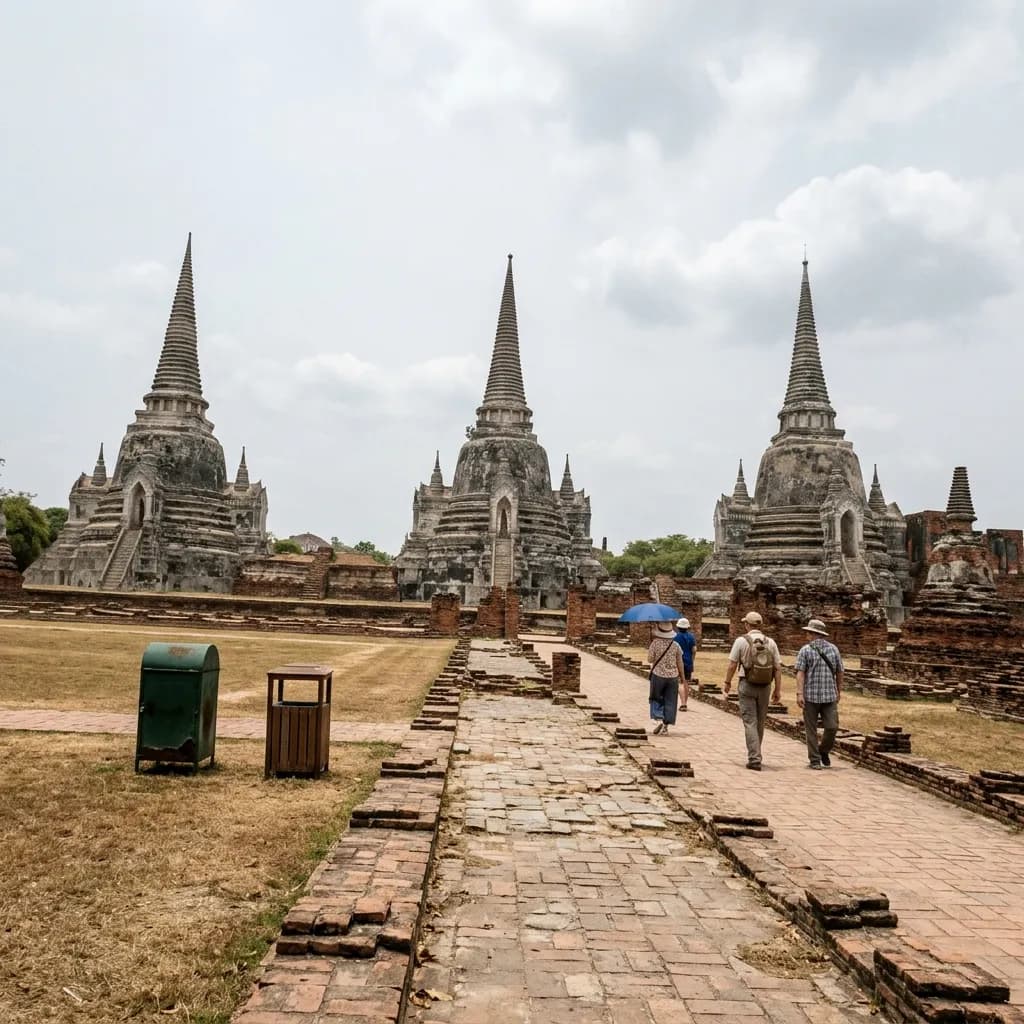 Wat Phra Si Sanphet: three chedis built to enshrine the ashes of Ayutthayan kings, once the grandest temple in the kingdom.
The Temples Worth Your Time
Ayutthaya's historical island is home to dozens of temple ruins. These are the ones that reward proper attention.
What Most Visitors Get Wrong About Ayutthaya
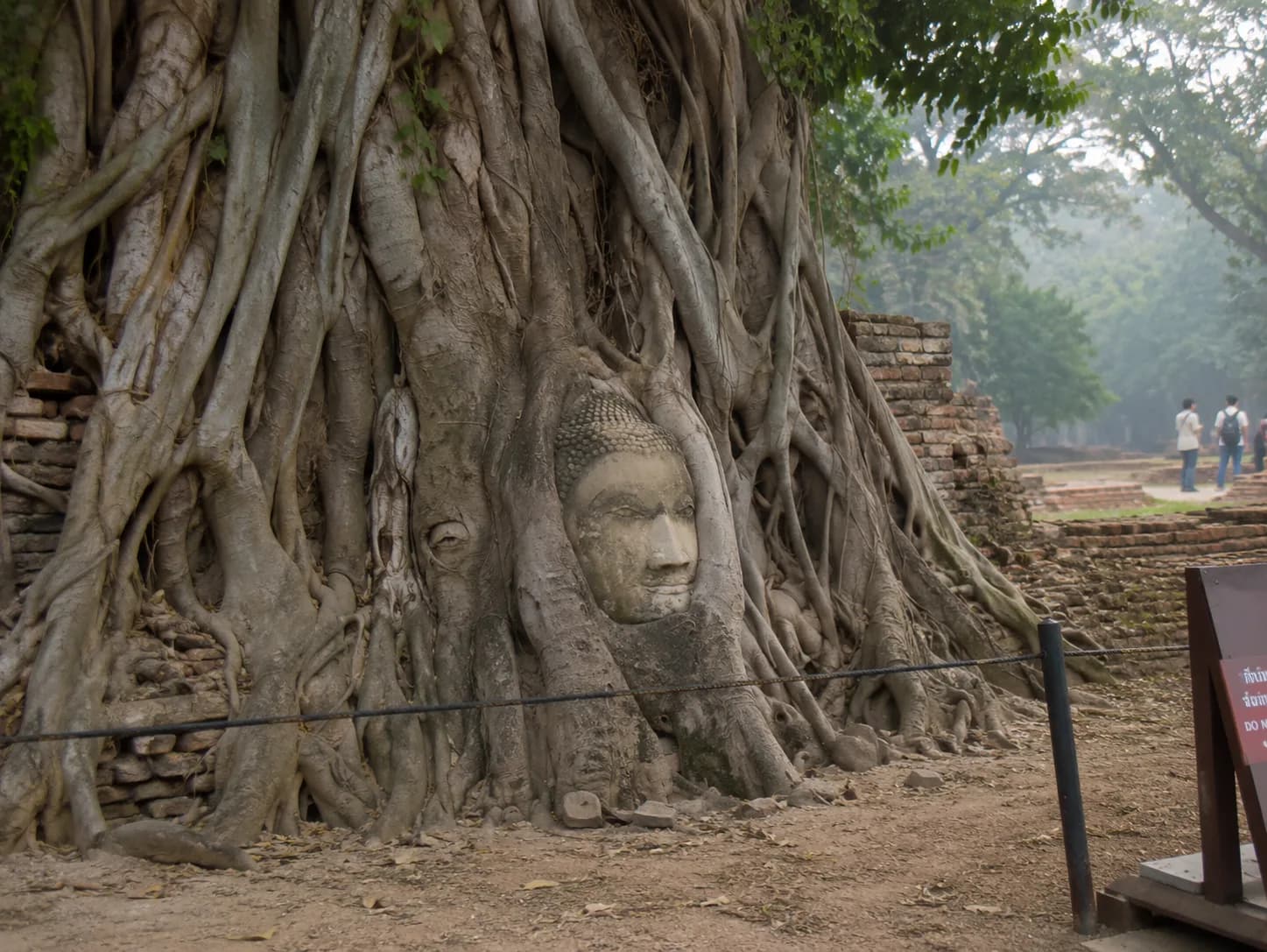
Ayutthaya is not a monument. It's a story, and a violent one. Most of the headless Buddha statues you see weren't accidents of time. Many were deliberately decapitated by Burmese soldiers during the sacking of 1767. Others had their heads removed by art thieves in the 20th century and sold to collectors in Europe and the United States.
Understanding this transforms the experience. You're not just walking through picturesque ruins. You're walking through the aftermath of a catastrophic defeat, and, somehow, through a place that has found a kind of grace in that.
A guide who knows this history changes everything about the visit. The same pile of broken stones becomes something you'll think about years later.
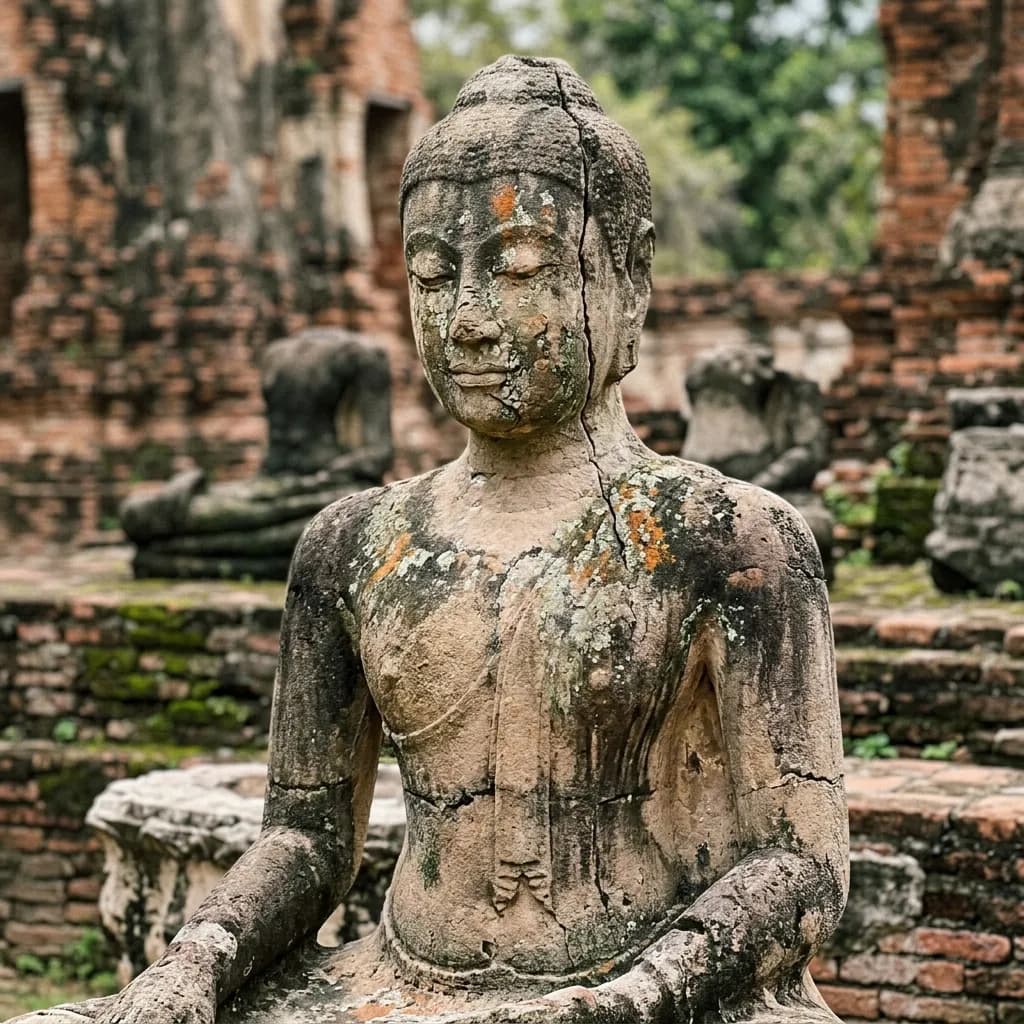 Many headless statues were deliberately damaged — understanding why transforms the experience entirely.
Ayutthaya by Land and River: The Extended Version
If a single day isn't enough (and for many visitors, it isn't), the Ayutthaya by Land & River tour combines a morning of temple exploration with an afternoon return to Bangkok by boat along the Chao Phraya.
This is the perspective that makes the most historical sense: Ayutthaya was built on a river island and the waterway was its lifeline. Arriving or departing by boat aligns perfectly with how the city actually worked for four centuries. Watching the riverside temples and palaces of Bangkok appear slowly from the water as you return south is one of those travel experiences that earns its own memory.
Practical Things Worth Knowing
Two Ancient Capitals in One Day
If you want to go further, the Two Ancient Capitals tour extends the day to include Lopburi, a city whose ruins are occupied by hundreds of free-roaming macaque monkeys and that once hosted ambassadors from Louis XIV of France. Two UNESCO-listed cities, one extraordinary day.
“The stones don't tell their story to everyone. They tell it to those who stand long enough to listen.”
Frequently Asked Questions
How long do you need in Ayutthaya?
A full day (8–9 hours) gives you enough time to see the major temples at a comfortable pace with breaks for food and water. Rushing through in 4–5 hours means you'll see the structures but miss the experience.
Is Ayutthaya worth visiting from Bangkok?
Consistently one of the highest-rated day trips in all of Thailand. The UNESCO listing exists for a reason — the scale and atmosphere of the ruins is genuinely different from anything you'll find in Bangkok.
Can I visit Ayutthaya independently?
Yes, the train is cheap and reliable, and tuk-tuk drivers at the station can cover the main temples in a day. However, without a guide, the historical depth of what you're seeing is largely inaccessible. The ruins speak to those who know what to listen for.
What is the best season to visit Ayutthaya?
November through February (the cool season) is most comfortable for outdoor exploring. Visiting outside of peak hours (before 10am or after 4pm) makes a significant difference in both crowd levels and temperature year-round.
Is Ayutthaya suitable for families with children?
Yes — the open-air ruins are natural and non-threatening for children, and the stories of ancient kingdoms tend to capture younger imaginations well. The bicycle option makes the visit more active and engaging for kids.

Written By
Monika
Born and raised in Thailand, Monika has spent the last decade exploring every hidden alley and remote village to bring you the most authentic experiences.