How to Visit Bangkok's Temples Without Getting It Wrong
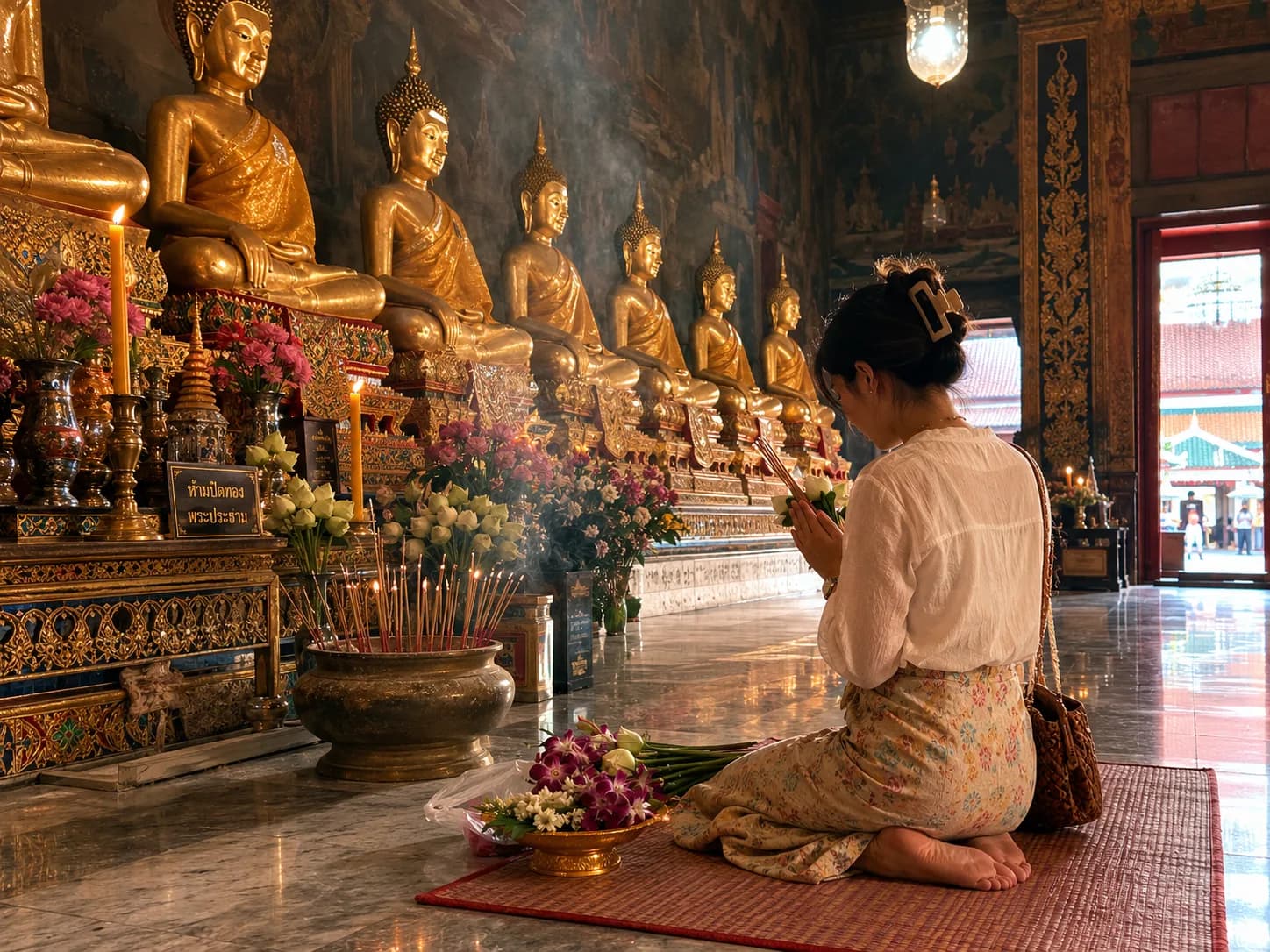
Bangkok's temples are not museums. They are living, functioning places of worship that happen to be open to visitors, and that distinction matters more than most travellers realise.
The murals on the walls of Wat Phra Kaew aren't decorative. The monks walking through Wat Pho at dawn aren't there for atmosphere. The threshold you're about to step over is believed to house a protective spirit. Understanding this changes how you move through these places, and it changes the quality of your experience entirely.
This guide covers everything you need to know before you go. Not to intimidate you, as Bangkok's temples are extraordinarily welcoming, but to help you show up the way the places deserve.
The Dress Code: What You Actually Need to Know
The rule is simpler than it looks: shoulders covered, knees covered.
For most temples in Bangkok (Wat Arun, Wat Pho, and the riverside temples), lightweight trousers or a maxi skirt and a shirt with sleeves is sufficient. The heat is real, so opt for breathable linen or cotton.
The Grand Palace and Wat Phra Kaew are stricter. The rules here are enforced at the gate:
Clothing rental is available at the Grand Palace entrance for those who arrive underdressed, but the sarongs and shirts provided are basic and warm. Wearing appropriate clothing from your hotel is strongly preferable.
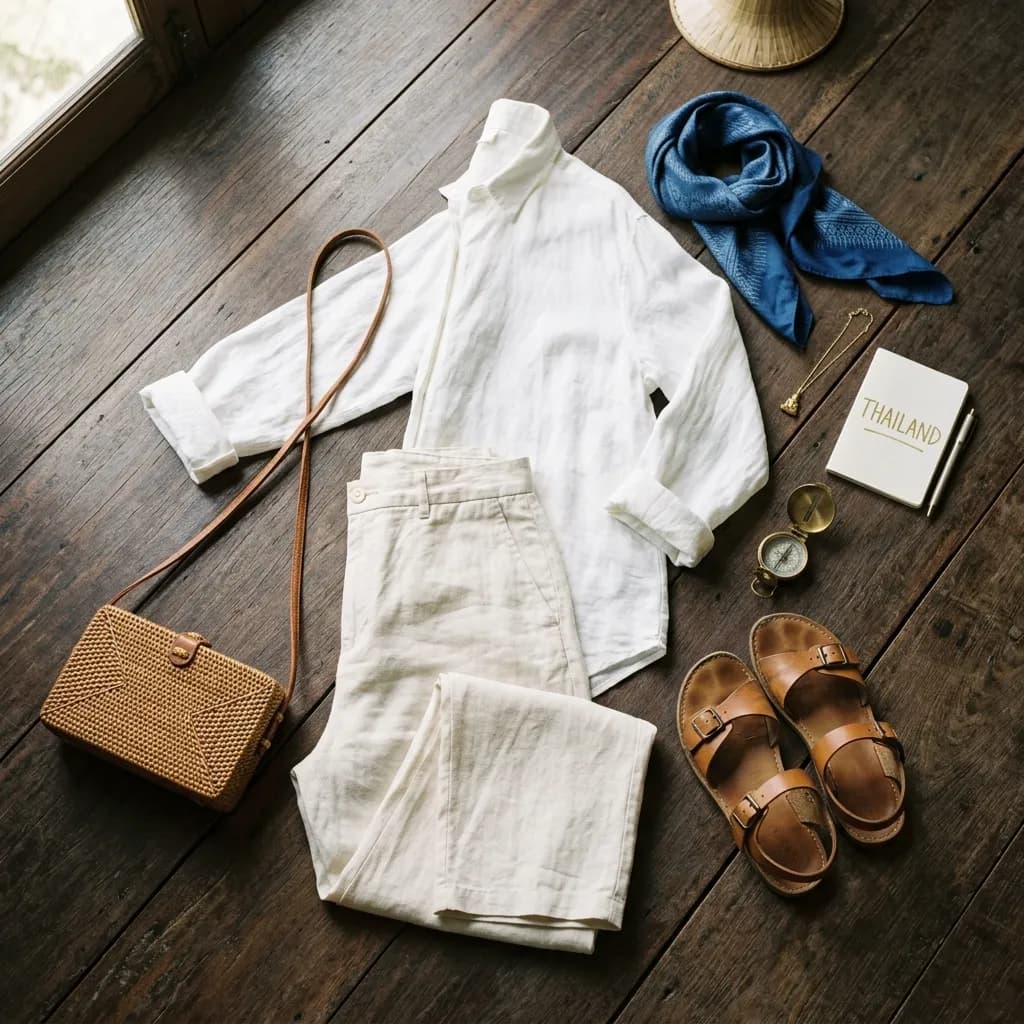 The right temple outfit: breathable linen, covered shoulders and knees, flat sandals.
Before You Enter the Building
Inside the Temple: The Essentials
Photography: What's Allowed and What Isn't
Most Bangkok temples permit photography. But permission is not the same as encouragement to treat the space as a photo opportunity.
- Never use a flash inside temple buildings
- Do not photograph individuals in prayer or meditation
- Do not pose with your back to a Buddha image; instead, back away from it when you leave
- Posing seated at the same height as or higher than a Buddha image is disrespectful
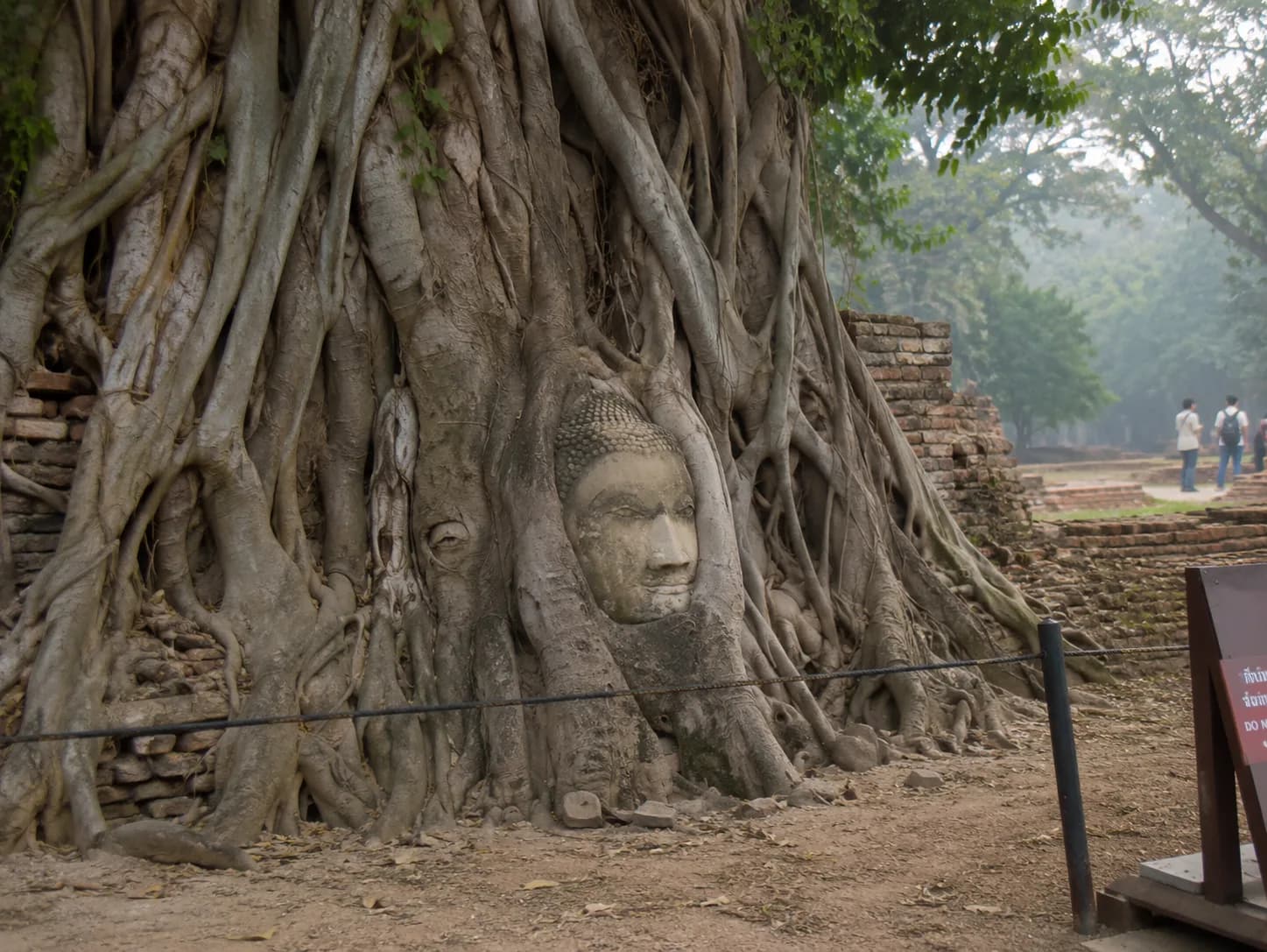
- At Wat Mahathat in Ayutthaya, the tree-encased Buddha head requires that you position yourself lower than the image when photographing; guards enforce this and will correct you politely
A good general rule: if you'd feel uncomfortable taking the photograph if you were being watched by the monks, don't take it.
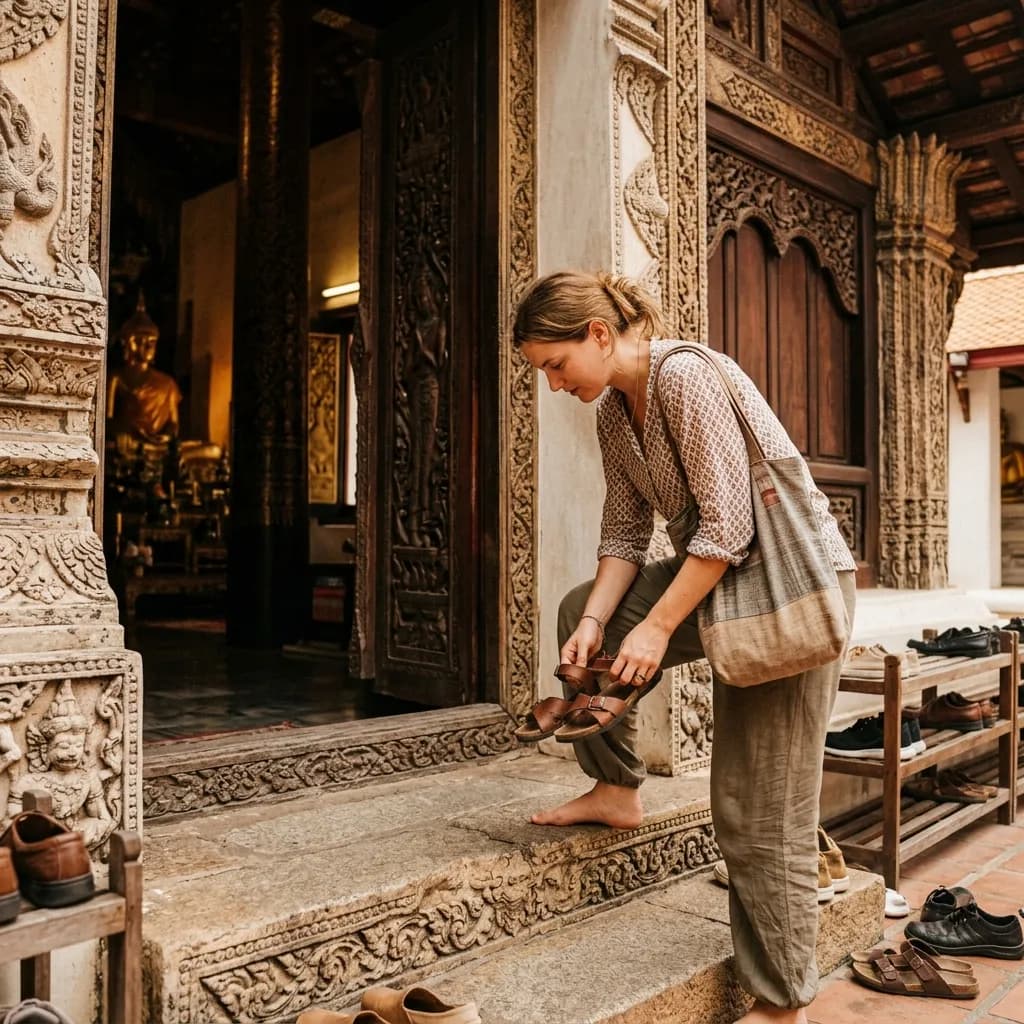 Removing shoes before entering is one of the most important — and most overlooked — temple customs.
The Wai: Thailand's Gesture of Respect
The wai — pressing your palms together at chest height and bowing your head slightly — is Thailand's universal gesture of greeting and respect. You'll see it everywhere. In temples, the appropriate version is slightly more formal: palms raised to forehead height with a deeper bow.
You don't need to wai constantly as a visitor — Thais understand that tourists aren't expected to know every nuance. But using it when greeting a monk or bowing to the Buddha image will always be appreciated and never looked at strangely. It costs nothing and communicates respect clearly.
A Few Things That Often Surprise Visitors
What This All Adds Up To
Bangkok's temples are among the most generous places on the planet for visitors. Entry is often free or very cheap, the grounds are open, and the welcome is genuine. The etiquette asked of you in return is minimal: cover up, remove your shoes, be quiet, point your feet away from the sacred.
These places have been here for centuries and will outlast us all. Visiting them with care is the least interesting part of the experience, but it ensures that what happens in those spaces stays available to everyone who comes after.
The Grand Palace & the Reclining Buddha tour and the Three Temples by the River tour both include full pre-visit briefings so you arrive knowing exactly what to expect and how to move through each space comfortably.
“Sacred spaces don't ask much of visitors. They ask only that you remember where you are.”
Frequently Asked Questions
What happens if I wear the wrong thing to a Bangkok temple?
At most temples, staff will politely indicate that your clothing is unsuitable and ask you to cover up or change. At the Grand Palace, you will be refused entry and directed to the clothing rental area nearby.
Can I visit Bangkok temples during religious ceremonies?
Yes, in most cases, but during an active ceremony, photography is not appropriate and keeping to the edges of the space and observing quietly is expected. If monks are chanting or a ceremony is underway, simply stand at the back and watch.
Do I need to remove my shoes at every temple?
Before entering any enclosed temple building or prayer hall, yes, without exception. Outdoor areas of the temple grounds do not require shoe removal.
Is it true you should never touch someone's head in Thailand?
Yes. The head is considered the most sacred part of the body in Thai culture, the opposite of the feet. Never pat a child on the head, even affectionately. This applies outside temples too, throughout Thai culture.
Are Bangkok temples open every day?
Most major temples are open daily from 8am or 9am until 5pm or 6pm. Hours vary slightly by site and may be affected by royal or national ceremonies. The Grand Palace occasionally closes to tourists for state events; it's always worth confirming on the day.
How much does it cost to enter Bangkok's major temples?
The Grand Palace and Wat Phra Kaew: 500 baht per person. Wat Pho: 200 baht. Wat Arun: 100 baht. Many smaller temples are free. All fees support maintenance of the sites.

Written By
Monika
Born and raised in Thailand, Monika has spent the last decade exploring every hidden alley and remote village to bring you the most authentic experiences.